The Guild of Scientific Troubadours is an alliance of songwriters united to write and record catchy pop songs about scientific discoveries. Nearly every day, a new discovery is revealed. Every week, new science art. Their website not only collects together precious flotsam and jetsam jettisoned from assorted science blogs and RSS feeds, but also acts as a repository for the musical tributes, which obviously, vary dramatically in quality.
Source: guildofscientifictroubadours.com
Monday, 22 June 2009

Sunday, 21 June 2009
Sound Black Hole
 Israeli physicists have created a unique phenomena - an acoustic black hole. Instead of trapping light in the form of photons (particles of light), the Technion laboratory in Haifa have created an artificial black hole which traps particles of sound - phonons.
The sound black hole was generated in attempt to detect Hawking radiation, the as yet hypothetical radiation proposed by Stephen Hawking more than 30 years ago, which causes black holes to evaporate over time.
Andrew Zimmerman Jones notes that "quantum physics indicates that pairs of "virtual phonons" are constantly being created and destroyed. If one of these pairs forms near the event horizon of the sound black hole, one of the phonons may end up getting pulled into the black hole while the other escapes." This may be the best proof yet that Hawking radiation exists.
Source: http://physicsworld.com
&
http://physics.about.com
Monday, 15 June 2009
Human ear inspires universal radio chip
 The IEEE Journal of Solid State Circuits report that MIT engineers have built a fast, ultra-broadband, low-power radio chip, modeled on the human inner ear, that could enable wireless devices capable of receiving cell phone, Internet, radio and television signals.
 Devices such as cellphones or FM radios are generally tuned to only a narrow frequency band. The new device is inspired by the network of hairs in the inner ear, which can pick up a wide range of sound frequencies.
One can't help but be reminded of Douglas Kahn's observation in his 2006 paper, Radio was discovered before it was invented (bringing amber to Riga):
"Since we humanoids have pressure-sensitive eardrums rather than electro-sensitive antennae, we must resort to technology. Perhaps it would be different if we had our 16,000-20,000 cochlear hairs growing on the surface of our heads like sideburns, instead of them being immersed in the two ocean shells in our heads, we would have our body's electrical apparatus at a more immediate disposal and be able to hear the electromagnetic class of waves."
One can't help but be reminded of Douglas Kahn's observation in his 2006 paper, Radio was discovered before it was invented (bringing amber to Riga):
"Since we humanoids have pressure-sensitive eardrums rather than electro-sensitive antennae, we must resort to technology. Perhaps it would be different if we had our 16,000-20,000 cochlear hairs growing on the surface of our heads like sideburns, instead of them being immersed in the two ocean shells in our heads, we would have our body's electrical apparatus at a more immediate disposal and be able to hear the electromagnetic class of waves."
Source: http://ieeexplore.ieee.org
Thursday, 28 May 2009
Tony Conrad's substratum of interests
 Tony Conrad is the maestro of "extended duration as a conceptual armature", a musician, filmmaker and media-theorist of pioneering stature. He established the monochrome flicker as one of the central tropes in moving image, and created entirely distinctive forms of drone music both within, and outside of, The Dream Syndicate. In later works, such as Slapping Pythagoras his theoretical positions on Western cultural discourse became more evident.
This stimulating and rich discussion between Conrad and fellow musician, David Grubbs, explores Conrad's views on physics:
"modern physics [has] been generated as a branch of music",
audiences:
"Something that intrigues me a lot – and which I still haven’t decided about – is the suggestion that music should not have audiences. Just to get the audience out of the picture entirely seems like an interesting challenge, because every time I tell myself that the audience is why I’m doing everything [....] Every time I find myself thinking that, I realize that I’m barking up the wrong tree, and that if I try to head in the opposite direction, there’s something like a multifarious void out there."
and the future:
"For me, there’s another project, and that is to begin to try to create a structure of laws that can address the needs of 2010. From Futurism to Dogme, manifesto-like conditions can be productive [...] There’s a kind of cultural convergence that’s taking place that brings all these things together. I don’t think that’s unproductive. It reflects the conceptual initiative that was apparent last century with Happenings and all kind of things, basically going back to the Futurists. The Futurists actually predicted the future."
A must-read.
Source: http://www.frieze.com/issue/article/always_at_the_end/
Tuesday, 26 May 2009
Frost ecologies
 A gallery of the fern-like structures that bloom on sea ice form when it's cold, still and dry.
The gallery was published on the occasion of an article on frost flowers, which explores the research of the OASIS project, which pursues key big-picture science issues regarding air-surface chemical interactions in the Arctic, and their evolution in future climates
"When his grandmother was a girl, she told him once, the sisters announced in school one day that the topic of study would be Living Creatures. 'I suggested ice. They threw me out of class.' "
Source: http://www.newscientist.com
Tuesday, 19 May 2009
The Long Shot
 Two rival scientific teams are locked in a high-stakes race to discover other earth-like worlds—and forever change our own.
Seed met the teams.
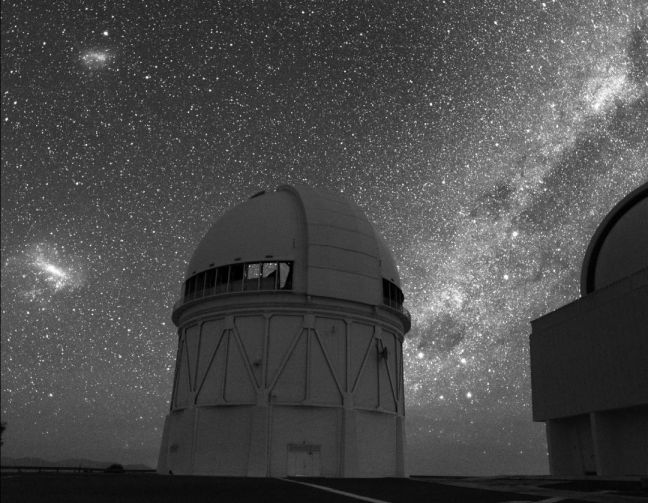
Debra Fischer, a professor at San Francisco State University, is co-discoverer of more than 150 planets. She is using a modest, neglected telescope at Cerro Tololo Inter-American Observatory (CTIO) in Chile to search for Earth-like planets in Alpha Centauri, the nearest star system to our own.
Michel Mayor operates the High Accuracy Radial velocity Planet Searcher (HARPS), at the European Southern Observatory’s facilities on the peak of La Silla, also in Chile.
Sunday, 10 May 2009
EU Approves further animal research
 It'll be bitterly disputed about whether this is a scientific step forward or an ethical quantum leap back, but this week, research involving non-human primates was given the go-ahead in an initial vote by the European Parliament.
Whilst Seed opines that "it was beginning to seem that Europe was on the fast track to scientific irrelevance [...] the outlook brightened a bit Tuesday when the European Parliament announced the passage of animal research rules that permit research done on non-human primates", the contrary view is voiced by Animal Defenders International (ADI), who are shocked that the MEPs vote will "strip away protection from wild caught primates; remove prior authorisation requirements for over 4million experiments, and reduce significantly proposals to regulate animal experiments across Europe".
Two anti-vivisectionist views are provided here: http://is.gd/yo38
And here: http://is.gd/yo3P
SEED's opinion piece is here: http://seedmagazine.com/
Source: http://www.the-scientist.com/blog/print/55675/
SEED's opinion piece is here: http://seedmagazine.com/
Source: http://www.the-scientist.com/blog/print/55675/
Saturday, 9 May 2009
Trimpin: sound of invention
 Take a look at the trailer for this documentary about German sound alchemist, Trimpin.
 He designs, builds, programs, and composes outrageous ensembles of musical instruments from the periphery of reality. One of his more ambitious experiments is designing a 'perpetual motion' machine in a glass foundry.
Source: http://www.vimeo.com/3559372
Monday, 4 May 2009
What went wrong at the LHC

Everyone's favourite pop-star physicist, Brian Cox, tells TED, and us, what went wrong at the LHC supercollider.
He covers the repairs now underway and what the future holds for the largest science experiment ever attempted.
Source: http://minurl.org/iAUum
Monday, 27 April 2009
Artists Takeover Over Illegal Billboards

Source: http://www.woostercollective.com
Subscribe to:
Posts (Atom)